I had a very vague understanding of autism when the evaluation was taking place. I originally thought that I knew what it was. Strange mannerisms, delayed speech, OCD-like behaviors, socially awkward. It was a temporary setback in his development. I was so very wrong.
After the psychologist's initial evaluation of him, she said that she felt comfortable telling us that she planned on giving him and autistic disorder diagnosis. This was the official diagnosis unless questionnaires from daycare and speech therapy told her otherwise. What she saw was what they saw, so this was it.
The first question we asked was "Is he going to be okay?" That is what every parent wants to know. She said yes, with lots of work and therapy. So this wasn't a temporary setback. It could be permanent if we didn't do our best.
As she began to explain how our son's mind worked, I couldn't help but feel like my son was this alien in the room with us human beings. I know, it's completely horrible, but this is all too common apparently. Every book I have read since then states that most parents feel as though they don't know who the kid is anymore. Even Jenny McCarthy reported feeling this way when the doctor diagnosed her child.
After reading more information on the AutismSpeaks.org website later that afternoon, I began to understand more about my son. While reading and feeling like he was still an alien, he came up to me at the computer and tried to climb into my lap. I picked him up and cuddled with him. It almost seemed as though he knew something was bugging me. Daddy and I had cried and he wanted to comfort me. It was this simple action from him that made me snap out of my feelings that I did not know this child. I did know him! I knew what he liked to do, to eat, to play with, when he wants to cuddle, and what his actions mean. What had changed was me, not him. He had always thought in this specific way; I was the one with the wrong impression of him.
It took about a solid week before I was able to talk directly about it without getting teary-eyed. It was really hard to accept, but after the reading I had done on the topic, I knew that I needed to move past the initial grief and get to acceptance.
Many books and articles I have read about life right after the diagnosis compare your feelings to that of the 5 stages of grief: bargaining, denial, depression, anger, and acceptance. Most parents feel these stages, but not in any particular order or even all of them. I felt them all, and even went back and forth with them from time to time. I made myself work through the emotional aspects of the stages so I could get to acceptance. That was the important part, accepting reality and moving forward.
The reason for feeling these 5 stages is because you lose the idea you had of your child's future. It is a profound sense of loss, just like a death. I had dreamed that my son would grow up to play college basketball at KU, but now I know that may not happen. Sure my kid is really tall for his age now, and even takes an interest in playing with his basketball goal, but he may develop other talents or interests. That could have happened anyways, but him having autism prevents me from seeing his future in any way. I don't know how far therapy will take him. Right now, he barely says anything and is just now beginning to develop receptive language at the age of 30 months. He also has little desire to play with other children or interact with most adults.
My suggestion to anyone else with a newly diagnosed child? READ! You will learn so much about how to help your child and also about how your child functions. My kid would go through periods of time at daycare and not eat. After studying when those events occurred, I came to realize that it was after his schedule had changed. He also would not sleep, which was after his schedule changed. He could barely communicate hunger to me, let alone tell me how anxious schedule and environment changes made him.
Learning how your child sees the world and his interactions within them will be of great help. I have a few books that I have read, which I definitely recommend.
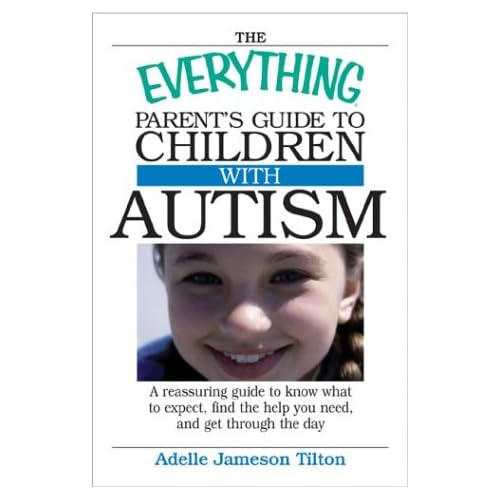 The Everything Parent's Guide To Children With Autism
This book was so informative and helpful! It gives you information on how to cope, what to expect with your friends and family, how to apply for aid, resources for further information, and even little know problems that may arise. Definitely good for someone who knows very little about Autism.

This book is somewhat controversial, but I like how you get insight into what living with a child with autism is like. You also get to see how another mother reacts to this and that your own feelings are normal. She discusses many different types of treatments, some that I don't even agree with. But either way, I felt this book initially helped me.

No comments:
Post a Comment